




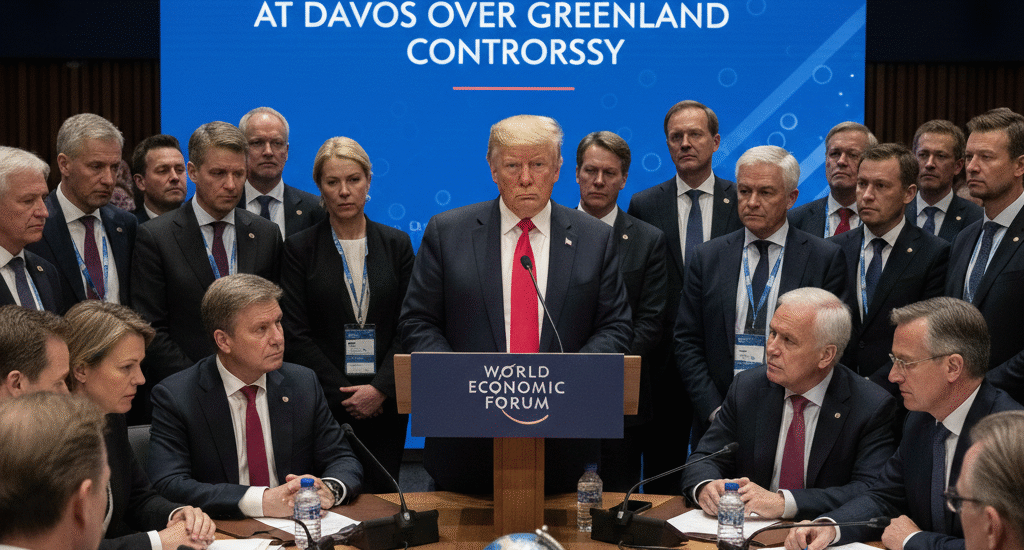
Davos, Switzerland: The arrival of U.S. President Donald Trump at the World Economic Forum (WEF) in Davos has generated significant international attention, primarily due to his controversial position on Greenland, a semi-autonomous Danish territory in the Arctic. Trump’s comments on acquiring or asserting influence over Greenland have sparked renewed diplomatic tensions with European nations and have become one of the most discussed topics at the annual global summit.
According to analysts, the Arctic region has gained increasing strategic importance over the past decade. Greenland, in particular, is considered vital due to its vast natural resources, geopolitical location, and potential for military deployment. Trump’s recent statements signaling interest in controlling or exerting influence over the island have raised eyebrows among NATO allies, particularly Denmark, which exercises sovereignty over Greenland.
At Davos, European leaders and U.S. officials are reportedly holding behind-the-scenes consultations to address the rising diplomatic friction. Several bilateral meetings are expected to focus on sovereignty, security, and Arctic policy coordination. While the United States emphasizes strategic interests and resource security, European countries have expressed concern over unilateral actions that could undermine regional stability.
Experts point out that Trump’s approach reflects a broader U.S. strategy to secure influence in resource-rich regions, even as it tests existing alliances. “Greenland is not just a piece of land; it is central to Arctic geopolitics. Any move perceived as aggressive can strain long-standing diplomatic relations,” said an international security analyst attending the forum.
The controversy also intersects with broader discussions at Davos about climate change, economic stability, and global governance in the Arctic. With melting ice opening new shipping routes and resource opportunities, nations are keenly observing U.S. policies and their implications for international law and cooperative frameworks.
Trump’s presence has already created a charged atmosphere at the summit. Media coverage and expert panels are highlighting both economic and strategic dimensions of the Greenland debate. Diplomatic sources indicate that NATO allies are closely monitoring U.S. intentions, while seeking assurances that any Arctic ambitions will not disrupt alliance cohesion.
Observers note that the coming days will be critical. How Trump balances domestic political priorities with international diplomatic pressures could have lasting impacts not only on U.S.-European relations but also on global Arctic policy and security arrangements.
In summary, the Greenland controversy has turned into one of the most significant talking points of Davos 2026. It underscores the intersection of geopolitics, resource security, and international diplomacy, highlighting how a single territorial interest can dominate discussions among world leaders and shape the broader strategic landscape.