





New Delhi / Kolkata:
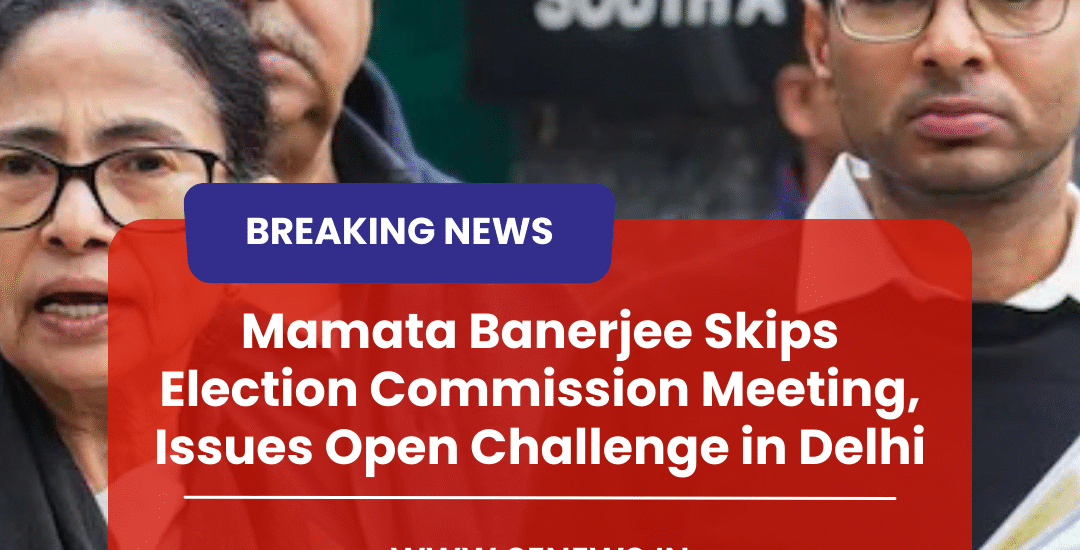
A fresh political confrontation has erupted between West Bengal Chief Minister Mamata Banerjee and the Election Commission of India (ECI) after she boycotted a scheduled meeting with the poll body in New Delhi. The Chief Minister later launched a sharp public attack on the Commission, accusing it of bias and challenging it to face mass protests over alleged irregularities in the voter list revision process.
Mamata Banerjee had travelled to the national capital with a delegation from the Trinamool Congress (TMC) to raise concerns regarding the ongoing revision of electoral rolls in West Bengal. The visit came amid growing allegations that genuine voters’ names were being removed or altered ahead of upcoming elections in the state.
Meeting Ends Without Resolution
According to sources, the meeting between the TMC delegation and Election Commission officials failed to reach any meaningful conclusion. Mamata Banerjee reportedly expressed dissatisfaction over the way discussions were conducted and chose to walk out before the talks could be completed.
Speaking to the media soon after, the Chief Minister said she felt the concerns of the state government and affected voters were not taken seriously. She alleged that the Election Commission adopted a dismissive attitude and failed to provide clear answers regarding the deletion and modification of names in the voter list.
Strong Words and Open Challenge
In a strong reaction, Mamata Banerjee accused the Election Commission of functioning under political pressure and targeting West Bengal unfairly. She claimed that ordinary citizens were being deprived of their democratic rights through flawed administrative processes.
Escalating her criticism, the Chief Minister threw down a public challenge, stating that she could mobilize one lakh people to march in protest if the alleged injustices were not addressed. She said that the voices of common voters could not be silenced and warned that continued negligence would lead to widespread agitation.
Allegations Over Voter List Revision
At the centre of the controversy is the Special Intensive Revision (SIR) of electoral rolls. The TMC has alleged that the process has resulted in the wrongful removal of voters, particularly from marginalized communities. Mamata Banerjee claimed that several families had discovered their names missing from the rolls or marked incorrectly, raising serious concerns about transparency.
She further questioned the timing of the revision exercise, arguing that such large-scale changes should not be carried out close to elections, as it could impact voter participation and fairness.
Election Commission Responds
While the Election Commission has not directly responded to Mamata Banerjee’s allegations in detail, officials have maintained that the revision process is being conducted strictly in accordance with constitutional provisions and established guidelines. The Commission has reiterated its commitment to neutrality and transparency and has urged political parties to cooperate rather than politicize administrative procedures.
ECI sources have indicated that mechanisms are in place for voters to submit claims and objections and that genuine grievances will be addressed through proper channels.
Political Reactions and Implications
The incident has triggered sharp reactions across the political spectrum. Leaders from the Trinamool Congress have rallied behind Mamata Banerjee, accusing the Centre of misusing constitutional institutions. On the other hand, opposition parties have accused the Chief Minister of attempting to pressure an independent body for political gains.
Political analysts believe the standoff reflects deeper tensions between state governments and central institutions, particularly as elections draw closer. The controversy is also likely to intensify debates around voter rights, administrative transparency, and the autonomy of constitutional bodies.
What Lies Ahead
As of now, there is no clarity on whether fresh talks will be held between the West Bengal government and the Election Commission. However, the strong rhetoric and public posturing suggest that the issue is far from over.
With elections on the horizon, the outcome of this dispute could have significant political and democratic implications, not just for West Bengal, but for the national discourse on electoral integrity.