





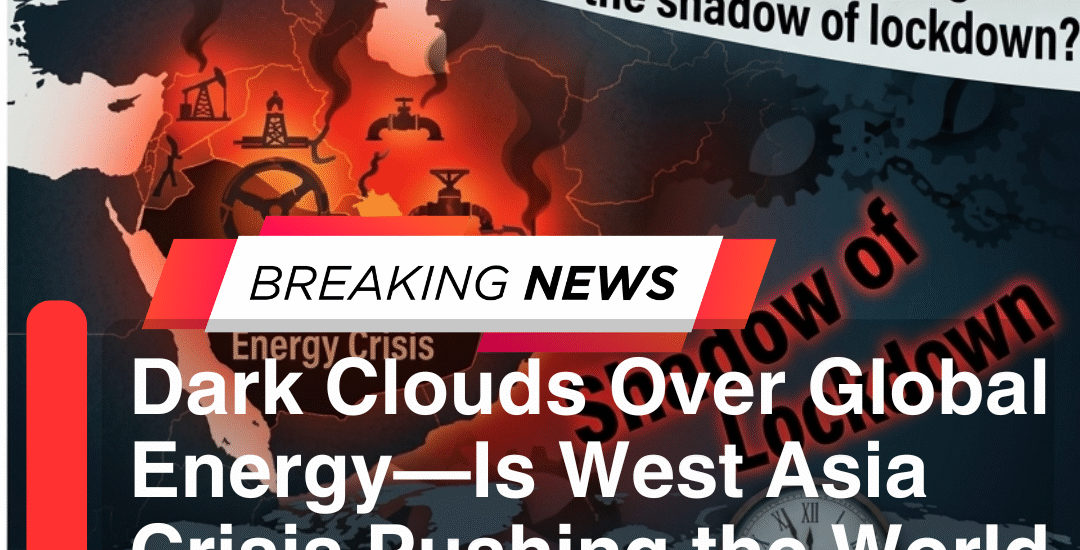
The memories of global lockdowns during the pandemic are still fresh. Empty streets, halted economies, and confined lives—scenes the world hoped never to witness again. Yet, a new kind of fear is beginning to emerge, not driven by a virus, but by a deepening energy crisis linked to escalating tensions in West Asia. As the situation intensifies, experts are warning of a possible “energy lockdown” that could disrupt normal life across nations.
Crisis Rooted in West Asia
At the heart of the current global concern lies the volatile situation in West Asia, a region that plays a critical role in supplying energy to the world. One of the most sensitive choke points is the Strait of Hormuz, through which a significant portion of the world’s crude oil and natural gas is transported.
Recent geopolitical tensions and conflict in the region have disrupted this vital route, leading to a sharp decline in global supply. As a result, international oil prices have surged, triggering a ripple effect across economies worldwide.
What Is an “Energy Lockdown”?
The term “energy lockdown” is now gaining attention in policy circles and public discussions. Unlike pandemic-induced lockdowns, this concept refers to restrictions imposed to conserve energy during times of shortage.
Such measures may include:
Limiting non-essential travel
Promoting work-from-home policies
Regulating electricity usage
Reducing industrial production
While not as severe as a complete shutdown, these steps could significantly alter daily life and economic activity if implemented widely.
Early Signs Already Visible
The impact of the crisis is no longer theoretical. Several countries have begun to feel the strain of rising energy costs and supply constraints. Governments in some regions are already introducing measures to reduce consumption and manage limited resources.
Industries, particularly energy-intensive sectors, are facing operational challenges. Rising fuel costs have increased transportation expenses, which in turn are pushing up the prices of essential goods. Small and medium enterprises are among the hardest hit, struggling to cope with escalating input costs.
Economic Pressure Mounting
The implications of this crisis extend far beyond fuel shortages. Economists warn that prolonged disruption in energy supply could trigger broader economic instability.
Key concerns include:
Rising inflation
Slower industrial growth
Supply chain disruptions
Increased cost of living
If the situation persists, the global economy could face a slowdown reminiscent of past energy crises, with long-term consequences for growth and employment.
India and Other Import-Dependent Nations
Countries heavily reliant on energy imports, including India, are particularly vulnerable. Any fluctuation in global oil prices directly impacts domestic markets, influencing fuel prices, transportation costs, and overall inflation.
While authorities are currently monitoring the situation closely, there is no indication yet of strict restrictions. However, experts believe that if the crisis deepens, measures aimed at conserving fuel and electricity may become unavoidable.
Beyond Politics: A Structural Challenge
This crisis is not solely a result of geopolitical tensions. It also highlights a deeper structural issue—global dependence on fossil fuels. The concentration of energy resources in specific regions makes the entire system vulnerable to disruptions.
Climate experts and policy analysts argue that this situation underscores the urgent need to accelerate the transition to renewable energy sources. Diversifying energy supply could reduce dependence on conflict-prone regions and enhance long-term stability.
What Lies Ahead?
The biggest question now is how long this crisis will last. If tensions in West Asia continue or escalate, the strain on global energy supply could intensify further.
Possible future scenarios include:
Wider adoption of energy-saving restrictions
Further increase in fuel prices
Greater pressure on households and industries
However, many analysts believe that a full-scale lockdown similar to the COVID era remains unlikely. Governments are expected to strike a balance between conserving resources and keeping economies functioning.
Conclusion
The unfolding energy crisis serves as a stark reminder of how interconnected the modern world is. A disruption in one region can quickly cascade into a global challenge, affecting everything from transportation to food supply.
While the term “energy lockdown” may still sound speculative, the risks it represents are real. As nations grapple with rising uncertainty, the focus will be on managing resources wisely while seeking long-term solutions.
The coming weeks will be crucial. Whether the world can navigate this crisis without severe disruption remains to be seen—but one thing is clear: the warning signs are already here.