






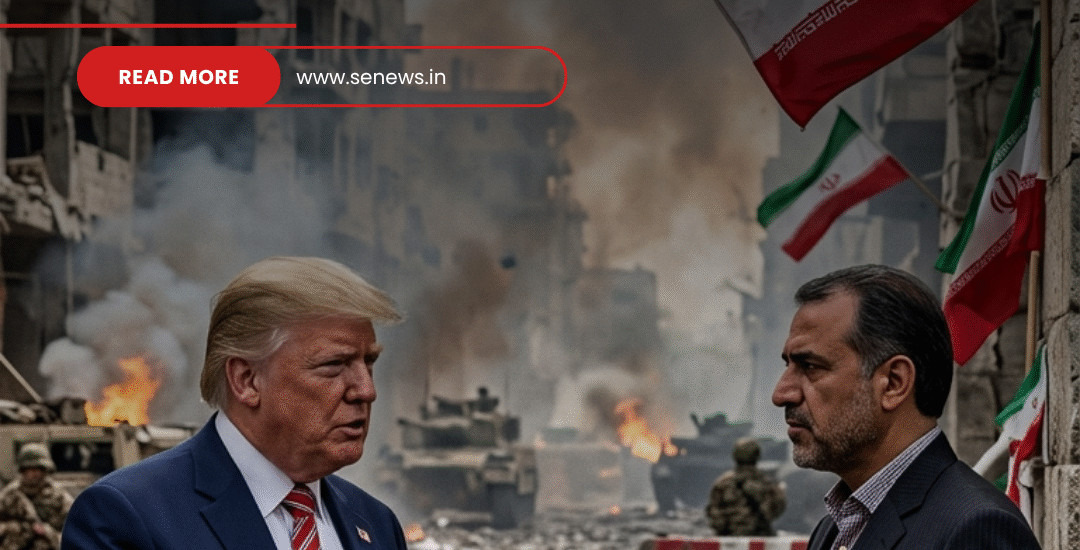
Dark clouds of uncertainty are once again gathering over the Middle East. Hopes for a possible ceasefire have collapsed at the last moment, triggering fresh concerns across global diplomatic circles. Iran has firmly rejected the ceasefire proposal put forward by the United States, and this decision is now pushing the already tense situation toward a more complex and potentially dangerous phase.
According to international observers, what is unfolding is no longer just a regional conflict. There is growing concern that it could gradually evolve into a broader geopolitical crisis. The key question now is whether Iran’s rejection is a calculated strategic move or the beginning of a more severe phase of confrontation.
Ceasefire Talks Collapse at the Final Hour
For the past several days, intense diplomatic discussions had been underway regarding a possible ceasefire. Multiple countries attempted to mediate between the conflicting sides in an effort to de-escalate tensions and prevent further violence.
The United States had set a clear deadline for Iran to respond to the proposal. However, as the deadline approached, Tehran made its position clear. Iranian authorities stated that a temporary ceasefire would not serve their interests. Instead, they are demanding a long-term, comprehensive solution that ensures lasting peace and eliminates the root causes of the conflict.
This stance has significantly complicated the negotiation process. While Washington appears focused on achieving an immediate halt to hostilities, Tehran is insisting on broader and more permanent guarantees.
Iran’s Conditions: Where Talks Are Stuck
Iran has outlined a series of conditions that analysts describe as stringent and difficult to fulfill in the short term.
Among their key demands are:
A complete and unconditional halt to all military operations
The removal of long-standing economic sanctions
Compensation for damages caused by the conflict
International guarantees to ensure long-term regional stability
These demands present a major challenge for the United States and its allies, who may not be willing—or able—to agree to such terms immediately. As a result, negotiations have reached a deadlock.
Strong Signals from the United States
On the other side, the United States is treating the situation with urgency. Officials have indicated that failure to reach an agreement within the stipulated timeline could lead to more decisive and possibly aggressive actions.
Experts believe that such statements are not merely diplomatic pressure tactics but may also signal readiness for military escalation. Reports suggest that military activities in the region have already intensified, raising alarms in international circles.
With tensions rising, fears are growing that if diplomatic channels fail completely, the situation could spiral into a direct and large-scale confrontation.
Ground Reality: Tensions Continue to Rise
As the chances of a ceasefire diminish, the intensity of the conflict appears to be increasing. Reports indicate a surge in attacks and counterattacks across multiple locations.
Civilians living in conflict zones are bearing the brunt of the crisis. Issues such as displacement, food shortages, and lack of medical aid are becoming increasingly severe, pointing toward a deepening humanitarian crisis.
The impact is also spilling over into neighboring countries. Several nations have issued alerts and heightened security measures along their borders, anticipating potential regional instability.
Impact on Oil Markets and Global Economy
The repercussions of the conflict are not limited to the region alone. Global markets are already feeling the pressure, particularly in the energy sector.
The Middle East plays a critical role in global oil supply, and instability in the region often leads to fluctuations in crude oil prices. Currently, prices are showing an upward trend, raising concerns about rising fuel costs worldwide.
Experts warn that if the conflict persists or escalates further, it could significantly disrupt global economic stability, affecting industries, trade, and everyday life across multiple countries.
Diplomatic Efforts: A Last Hope?
Despite the growing tension, several countries are still attempting to keep diplomatic channels open. Efforts are being made to bring both sides back to the negotiating table and prevent further escalation.
However, given the current positions of both parties, the success of these efforts remains uncertain. Analysts emphasize that restraint, patience, and pragmatic decision-making are crucial at this stage.
What Lies Ahead?
The current developments clearly indicate that resolving this conflict will not be easy. Balancing strategic interests with national security concerns is proving to be a complex challenge for all involved parties.
The global community is now closely watching the situation, with one critical question in mind:
Will diplomacy prevail, or is the region heading toward a more dangerous and widespread conflict?
Conclusion
Iran’s rejection of the ceasefire proposal at such a critical juncture has injected fresh uncertainty into an already volatile situation.
The stakes are high, and the margin for error is extremely narrow. A single miscalculation could push the conflict into a far more destructive phase.
For now, the world waits—hoping that dialogue and diplomacy will ultimately succeed in preventing a larger crisis.