








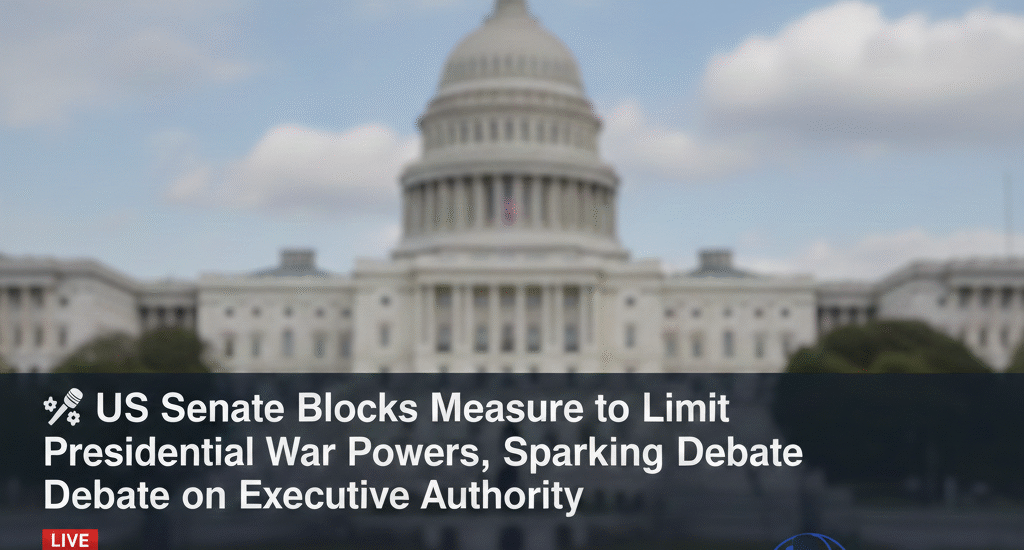
Washington D.C. — The balance of military decision-making in the United States has come under fresh scrutiny after the US Senate narrowly blocked a resolution aimed at restricting the President’s authority to launch military actions without congressional approval. The vote has reignited a national debate over executive power, congressional oversight, and the proper limits of presidential discretion in foreign affairs.
The resolution, backed by several members of Congress, was designed to increase legislative oversight on the President’s ability to engage in armed conflicts abroad, particularly in situations like the ongoing geopolitical tensions involving Venezuela. Proponents argued that unchecked presidential authority could lead to unilateral military interventions, bypassing the constitutional role of Congress in declaring war.
During the vote, a significant portion of Republican senators opposed the measure, emphasizing the need for the President to retain the flexibility to respond rapidly to international crises. “National security demands that the Commander-in-Chief can act decisively,” several senators noted, warning that excessive legislative restrictions could undermine America’s ability to protect its interests abroad.
On the other hand, a coalition of Democrats and some Republicans supported the resolution, citing concerns about the potential for overreach and the precedent set by granting the President wide-ranging unilateral military powers. Supporters emphasized that Congress holds the constitutional authority to declare war, and any dilution of that power could set dangerous precedents for future conflicts.
Following the Senate vote, political analysts and advocacy groups have reacted strongly. Critics argue that blocking the measure further consolidates military authority in the executive branch, reducing checks and balances on presidential actions. Human rights and anti-war organizations also raised alarms, warning that such a decision could increase the likelihood of unilateral military engagements overseas.
Experts in international relations note that the Senate decision may have implications far beyond domestic politics. With ongoing geopolitical tensions in Latin America and other regions, a stronger executive mandate may result in a more assertive U.S. military posture abroad, potentially affecting diplomatic relations and global stability.
Overall, the narrow rejection of the resolution underscores the ongoing tension between Congress and the President over military authority. Analysts predict that debates over presidential war powers will continue, shaping future legislation and influencing the scope of executive action in foreign policy.
SeNews will continue to track this evolving story and provide updates on the political and international ramifications of this landmark Senate vote.