







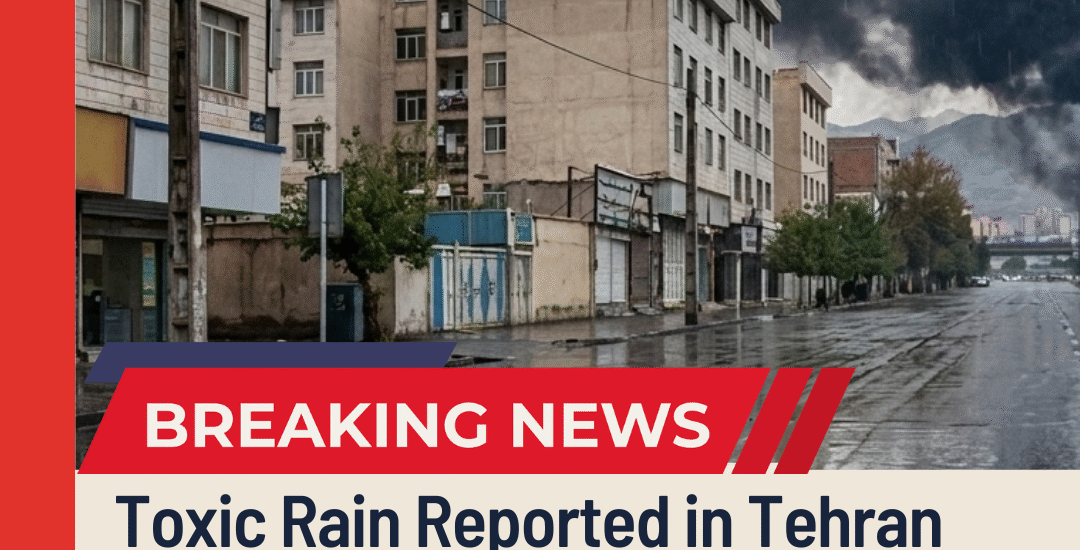
A worrying environmental situation has emerged in Iran’s capital Tehran following powerful explosions at several oil storage depots. The blasts triggered large fires that sent thick clouds of dark smoke and chemical fumes into the sky. Soon after, residents in different parts of the city began reporting unusual rainfall that appeared dark and oily, raising fears of toxic or contaminated rain.
According to initial reports, the explosions occurred at major oil storage facilities located on the outskirts of Tehran. The impact of the blasts was intense, and several large fuel tanks caught fire almost immediately. The flames and smoke continued for hours, with towering plumes visible across much of the city. Emergency services rushed to the area to control the blaze while authorities began assessing the damage.
Environmental specialists believe that the burning oil released a large amount of pollutants into the atmosphere. When such smoke mixes with clouds and moisture in the air, it can sometimes lead to rainfall carrying tiny particles of soot, oil residue, and other chemicals. This type of rainfall is often described as “black rain” because it may contain dark particles from the smoke.
Residents in several neighborhoods said that after the rain stopped, black or oily marks could be seen on vehicles, rooftops, and streets. Some people also reported a strong smell in the air and reduced visibility due to heavy smoke. These observations quickly spread on social media, increasing concern among citizens.
Health experts say that rain contaminated with industrial pollutants can cause irritation to the skin and eyes if it comes into direct contact with the body. Breathing air filled with smoke and chemical particles may also lead to coughing, throat irritation, or breathing difficulties, especially for children and elderly people. Because of these risks, people have been advised to limit outdoor activities until the situation improves.
Local authorities and emergency teams are continuing efforts to control the fires and reduce the spread of smoke. Air quality monitoring is also being carried out to determine how much pollution has entered the atmosphere and whether it poses a long-term risk.
The explosions also damaged parts of the oil storage infrastructure, which may temporarily affect fuel distribution in nearby areas. Officials have assured residents that steps are being taken to stabilize the situation and restore normal operations as soon as possible.
Experts warn that large oil fires can have environmental effects that last for several days or even weeks. Pollutants released into the air may travel long distances and mix with rain clouds, potentially affecting areas beyond the immediate blast zone.
For now, authorities are urging residents to remain cautious, avoid direct contact with rainwater if possible, and follow safety guidelines while emergency crews continue working to bring the situation fully under control.