







The ongoing conflict involving Iran, Israel and the United States has entered its 12th day, with tensions continuing to escalate across the Middle East. Despite nearly two weeks of fighting, there are no signs of the situation easing. Fresh missile alerts and the sound of warning sirens in several areas have added to fears of further escalation in the region.
Reports indicate that sirens were heard again in multiple locations on Wednesday following the possibility of new missile strikes. Security agencies in several countries across the region have stepped up surveillance and precautionary measures as concerns over continued attacks remain high. The prolonged confrontation has also drawn significant attention from the international community.
At the center of the latest concerns is the Strait of Hormuz, one of the world’s most crucial maritime routes for global oil transportation. Iran has repeatedly warned that it could block the passage if tensions continue to rise. The strait handles a large portion of the world’s crude oil shipments, and any disruption there could have major consequences for global energy supplies.
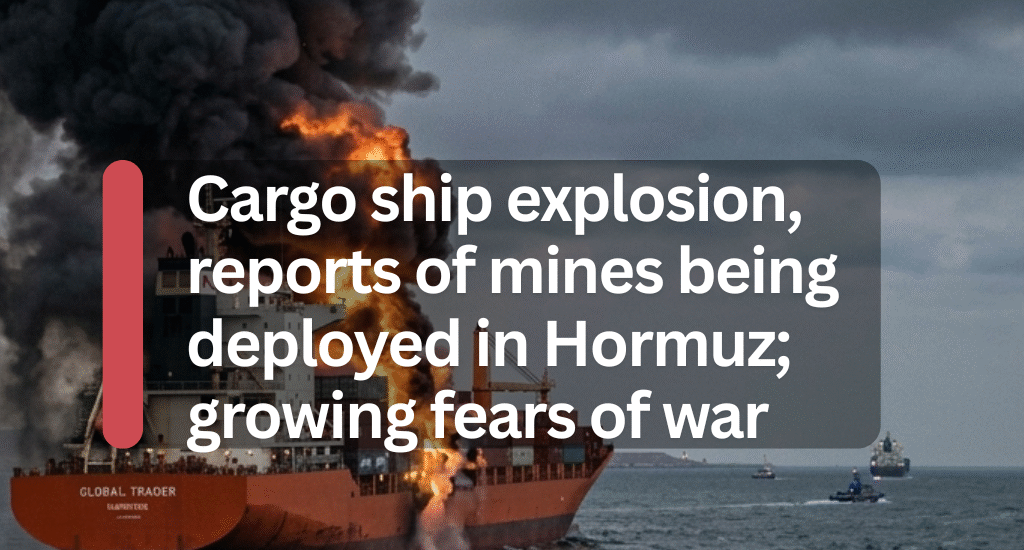
Amid this growing tension, reports emerged of explosions being heard on a British cargo vessel in waters near the strait. The incident quickly sparked concerns among international shipping authorities and raised questions about the safety of vessels moving through the region. Maritime security agencies have urged ships operating in the area to remain cautious and follow safety advisories.
Soon after the incident, Iranian sources stated that several mine-carrying boats had been deployed in the Strait of Hormuz as part of defensive preparations. The announcement further heightened concerns about the safety of international shipping routes and the potential for a broader conflict in the region.
Meanwhile, former U.S. President Donald Trump claimed on his social media platform Truth Social that Iran was attempting to block the Strait of Hormuz. According to his statement, U.S. forces destroyed 16 Iranian boats that were suspected of posing a threat in the strategic waterway. However, he also suggested that there was no clear evidence indicating that explosive mines had been laid across the strait.
In contrast, a report by international media outlet CNN suggested that dozens of naval mines may have already been placed in parts of the Strait of Hormuz. The report cited two officials connected to U.S. intelligence agencies who indicated that such developments had recently been observed. At the same time, the report noted that it remains unclear whether Iran was directly responsible for placing those mines.
Security analysts believe that any escalation around the Strait of Hormuz could have far-reaching consequences for global trade and energy markets. Since a significant portion of the world’s oil supply passes through this route, even a temporary disruption could trigger major fluctuations in international oil prices.
With missile threats, maritime incidents and political accusations continuing to unfold, the conflict in the Middle East remains highly volatile. Diplomatic observers say the coming days will be crucial in determining whether tensions ease through negotiations or intensify further, potentially impacting global stability and energy security.