







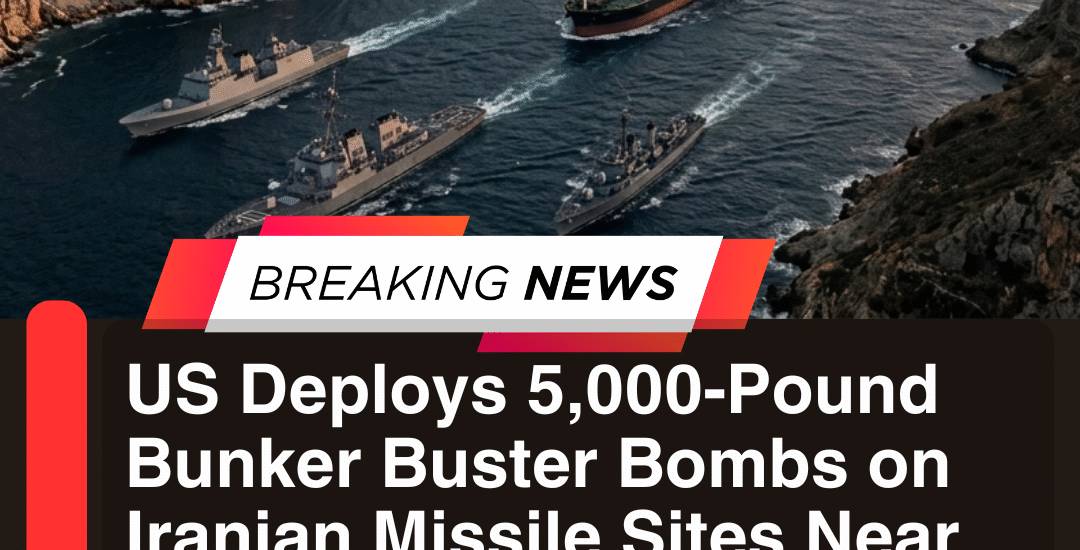
In a significant escalation of tensions in the Middle East, the United States has carried out a series of high-impact airstrikes targeting Iranian missile installations near the strategically critical Strait of Hormuz. According to official sources, the operation involved the use of advanced 5,000-pound “bunker buster” bombs designed to penetrate deep underground fortifications.
The strikes were aimed at neutralizing Iranian missile systems believed to pose a threat to international shipping lanes. These installations, reportedly positioned along key coastal areas, were capable of launching anti-ship missiles that could disrupt maritime traffic in one of the world’s busiest oil transit corridors.
Strategic Importance of the Strait
The Strait of Hormuz remains a crucial chokepoint for global energy supplies, with a substantial percentage of the world’s oil shipments passing through the narrow waterway daily. Any disruption in this region has immediate implications for global markets, including potential spikes in crude oil prices and increased shipping risks.
Recent weeks have seen heightened military activity around the strait, with multiple reports of vessel interceptions, drone surveillance, and warnings issued to commercial shipping operators. The latest US action appears to be a direct response to what it describes as “credible threats” from Iranian forces targeting maritime security.
Nature of the Weapons Used
Military analysts highlight that the bombs used in the operation belong to a class of precision-guided munitions engineered specifically for hardened and deeply buried targets. Commonly referred to as bunker busters, these weapons can penetrate reinforced concrete and layers of earth before detonation, making them particularly effective against underground bunkers and missile silos.
The deployment of such heavy ordnance indicates the importance of the targets and the level of threat perceived by US defense authorities.
Rising Tensions and Military Posturing
The strikes come amid an already volatile regional climate marked by increasing friction between the United States and Iran. Both sides have engaged in a series of strategic maneuvers, including naval deployments, aerial surveillance, and indirect confrontations through allied groups.
While US officials maintain that the operation was defensive in nature, aimed at ensuring the safety of international waters, Iranian authorities have yet to issue a comprehensive response. However, observers expect retaliatory rhetoric or actions that could further intensify the situation.
Global Reactions and Concerns
The international community is closely monitoring developments, with several countries expressing concern over the potential for broader conflict. Energy-importing nations, in particular, are wary of the economic fallout that could result from prolonged instability in the region.
Diplomatic channels are reportedly active, with efforts underway to prevent further escalation and maintain open shipping routes. Meanwhile, global oil markets have begun reacting cautiously, reflecting uncertainty over the stability of supply chains.
Outlook
Security analysts warn that the situation remains fluid, with the possibility of additional military engagements in the coming days. The use of high-impact weaponry underscores the seriousness of the current phase of the conflict.
As tensions continue to rise, the focus remains on whether diplomatic interventions can de-escalate the crisis or if the region is heading toward a prolonged and potentially wider confrontation.