








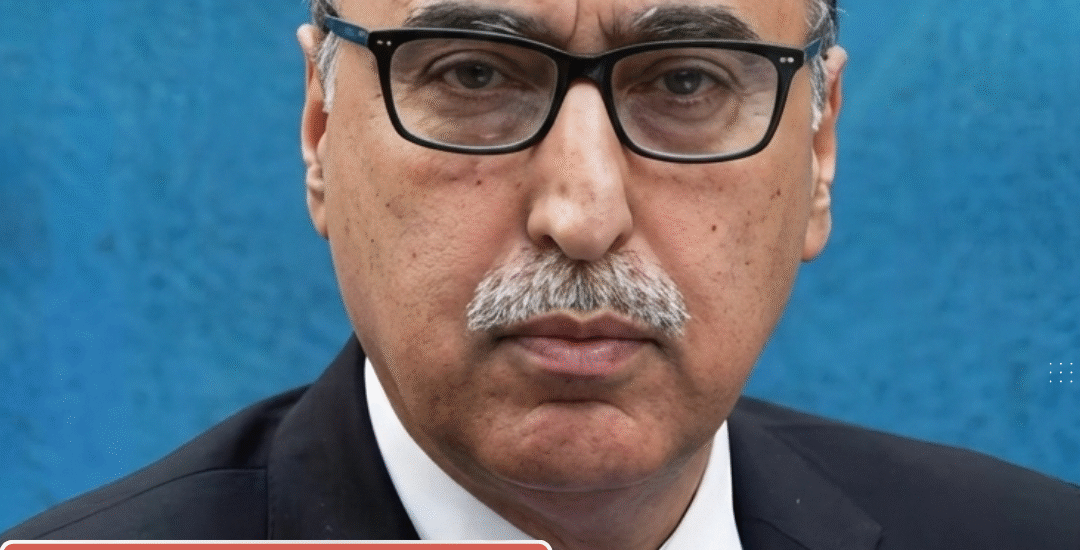
A controversial statement by former Pakistani diplomat Abdul Basit has triggered widespread concern across South Asia and beyond, drawing sharp attention to the fragile security dynamics of the region. His remarks, made during a televised discussion, have reignited debates over nuclear deterrence, strategic doctrines, and the risks of escalation involving multiple nations.
Basit, who previously served as Pakistan’s High Commissioner to India, suggested that in the event of a military strike by the United States on Pakistan, Islamabad might have no option but to target major Indian cities such as Mumbai and New Delhi. Though he framed his comments within a hypothetical “worst-case scenario,” the implications of such a statement have been viewed as deeply unsettling by strategic experts and policymakers.
A Hypothetical Scenario With Real-World Implications
During the discussion, Basit outlined a scenario in which the United States could potentially target Pakistan’s nuclear infrastructure. In such a situation, he argued, Pakistan’s ability to retaliate directly against the US mainland would be limited due to geographical and technological constraints.
He went on to suggest that Pakistan’s existing missile systems are primarily configured with India in mind, implying that any retaliatory response could be redirected toward Indian targets. This line of reasoning, even if theoretical, has raised serious concerns about the possibility of a third country being drawn into a conflict that does not directly involve it.
Security analysts have emphasized that even speculative statements involving nuclear-armed nations must be treated with caution, as they can influence perceptions, heighten tensions, and inadvertently escalate crises.
Strategic Context Behind the Statement
The timing of Basit’s remarks is particularly significant. Recent global security assessments have pointed to growing concerns over missile development programs in various countries, including Pakistan. Reports from US intelligence agencies have suggested that advancements in missile technology could alter strategic balances in the coming years.
These assessments have been echoed by senior American officials, who have warned about the evolving capabilities of several nations. In response, voices within Pakistan’s strategic community have pushed back against what they perceive as exaggerated or biased interpretations of their defense posture.
Basit’s comments appear to be part of this broader discourse, reflecting a defensive narrative that seeks to underline Pakistan’s deterrence strategy. However, the manner in which the argument was presented has drawn criticism for its provocative tone and potential to inflame regional sensitivities.
India at the Center of the Debate
One of the most striking aspects of the statement is the explicit reference to India as a potential target in a US-Pakistan conflict scenario. This has led to renewed scrutiny of long-standing tensions between India and Pakistan, both of which are nuclear-armed neighbors with a history of conflict.
Experts note that Pakistan’s military planning has traditionally been India-centric, given the geographical proximity and historical disputes between the two countries. However, linking India to a hypothetical conflict involving the United States introduces a new layer of complexity.
Such a perspective raises critical questions about escalation pathways and the risks of miscalculation. If a conflict between two nations were to spill over and involve a third, the consequences could be catastrophic, not just for the region but for global security as a whole.
Reactions From Strategic and Political Circles
The response to Basit’s remarks has been swift and largely critical. Strategic affairs experts have described the statement as “irresponsible” and “deeply concerning,” particularly given Basit’s background as a seasoned diplomat.
Many analysts argue that individuals who have held high-level diplomatic positions carry a certain level of responsibility, even after leaving office. Their words can carry weight in international discourse and may be interpreted as reflective of broader strategic thinking within their country.
In India, the statement has been met with alarm, with several commentators highlighting the dangers of normalizing such rhetoric. They have called for restraint and emphasized the importance of maintaining diplomatic channels to prevent misunderstandings.
International observers have also weighed in, noting that such statements could complicate ongoing efforts to maintain stability in an already volatile region.
Clarifying the Official Position
It is important to note that Abdul Basit no longer holds any official position within the Pakistani government. As such, his comments do not represent the official policy of Islamabad.
However, the distinction between personal opinion and official stance is not always clear in the realm of international relations. Statements made by former officials can sometimes be perceived as indicative of underlying strategic thinking, especially when they touch on sensitive issues like nuclear policy and military retaliation.
So far, there has been no formal response from the Pakistani government addressing Basit’s remarks. This silence has left room for speculation, further fueling the debate.
The Risks of Escalatory Rhetoric
The incident highlights a broader issue in international politics: the impact of rhetoric on security dynamics. In regions marked by historical tensions and nuclear capabilities, even hypothetical scenarios can have real consequences.
Experts warn that such statements can:
Increase mistrust between nations
Trigger defensive posturing or military signaling
Undermine ongoing diplomatic efforts
In a worst-case scenario, misinterpretations or overreactions could lead to unintended escalation, making it crucial for public discourse to remain measured and responsible.
A Reminder of Regional Fragility
South Asia remains one of the most sensitive geopolitical regions in the world. The presence of nuclear weapons, combined with unresolved disputes and periodic crises, makes stability a constant challenge.
Incidents like this serve as a reminder of how quickly narratives can shift and tensions can rise. While governments may exercise caution in their official communications, statements from influential individuals can still shape public perception and policy debates.
Conclusion
Abdul Basit’s remarks have once again brought the spotlight onto the delicate balance of power in South Asia. While framed as a hypothetical scenario, the suggestion of targeting major Indian cities in response to a US action has raised serious concerns about the implications of such thinking.
As the region navigates an increasingly complex security environment, the need for responsible dialogue and diplomatic engagement has never been greater. Whether this episode leads to any tangible policy shifts remains to be seen, but it has undoubtedly sparked an important conversation about the risks of escalation and the importance of strategic restraint.
For now, the focus remains on how regional and global actors respond to such statements and whether they can reinforce mechanisms that promote stability over confrontation.